American Agricultural School, September 4, 2026
The 4th meeting of the National Dialogue on the new CAP 2028–2034 took place on Friday, September 4, 2026, in the green surroundings of the American Farm School of Thessaloniki.
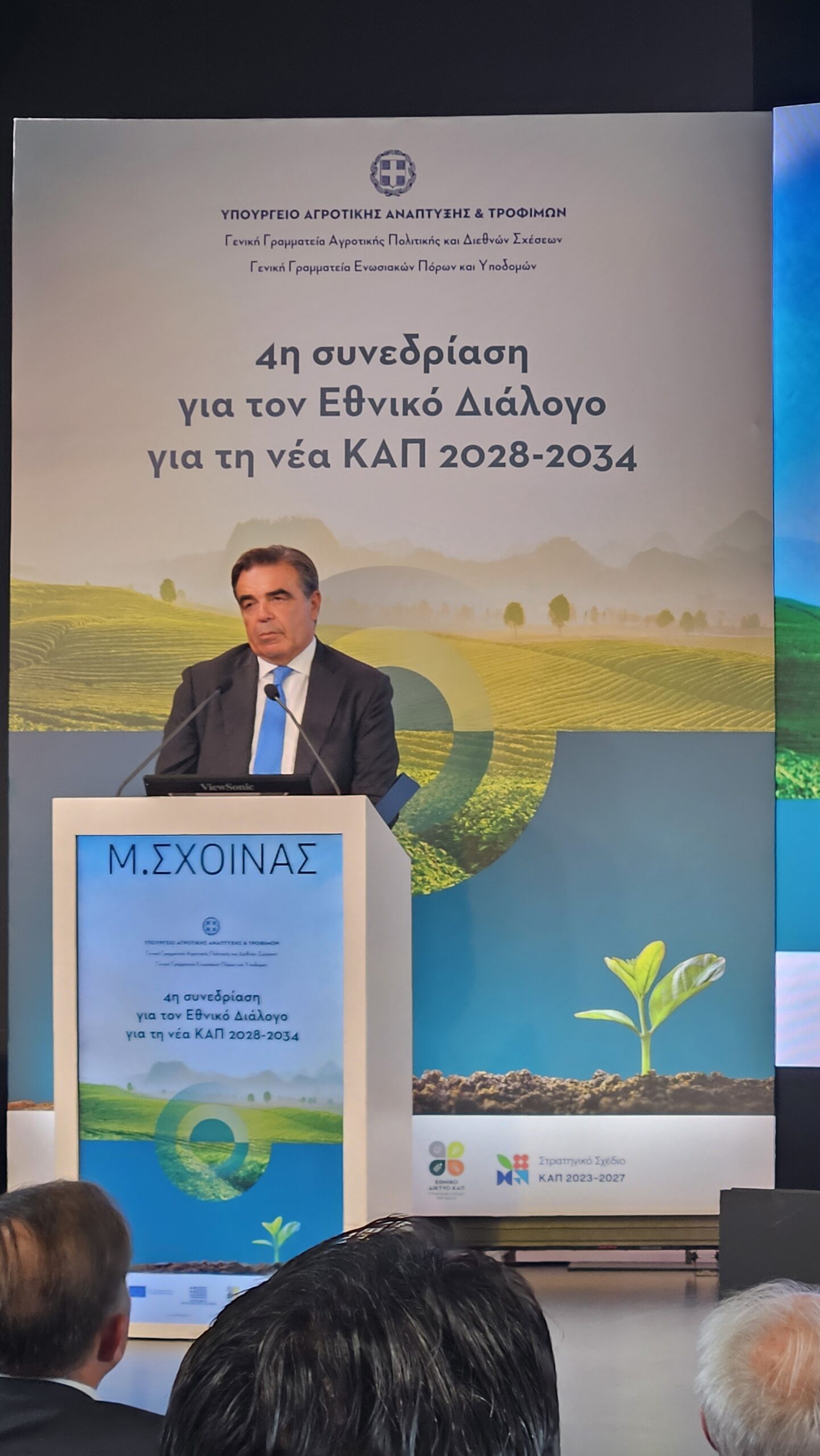
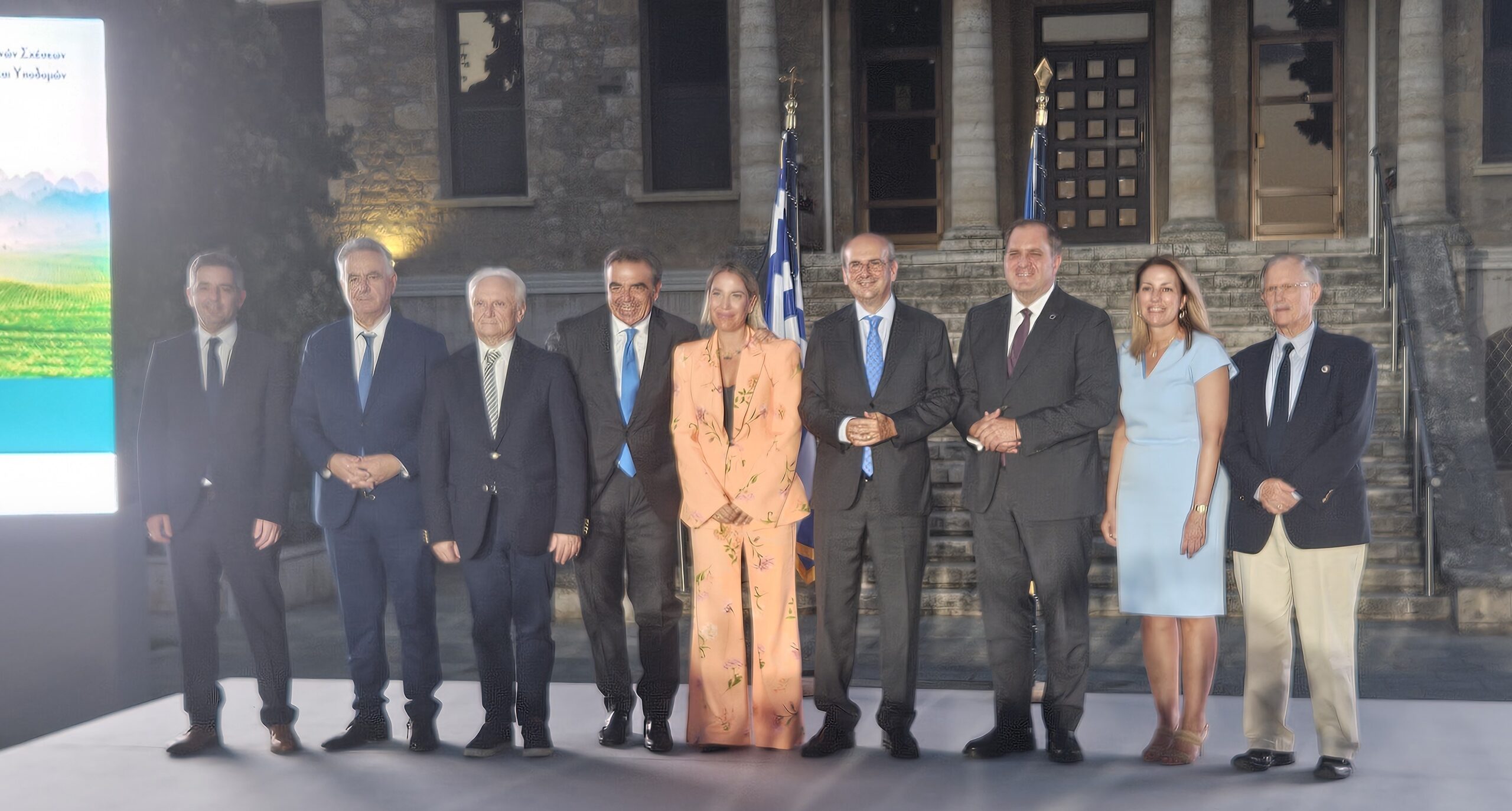
The 5-hours long meeting was organized by the Ministry of Agriculture Development and Food (Minagric), which was represented by the Minister, Mr. Margaritis Schinas, and the two Secretaries-General: Ms. A. Zerva (Secretary General for EU Funds and Infrastructure) and Mr. A. Filippis (Secretary General for Agricultural Policy and International Relations).
The event’s program

The first part of the event took place in the auditorium of the American Farm School, while the second part was held in the courtyard, which had been specially arranged for the occasion.
The evening’s moderator was Ms. F. Makantasi, Research Director at diaNEOsis (a Greek thinktank). After emphasizing the importance of the National Dialogue for shaping Greece’s proposal in view of the new programming period of the Common Agricultural Policy, she signaled the start of the official welcoming remarks.
This was followed by a welcome address from the President of the American Farm School, Mr. Landslade, who recalled the words of composer Mikis Theodorakis during his visit to the School: “A major problem of the modern world is that our feet no longer touch the earth.” In this way, he underscored the importance of the agricultural sector, as well as the phenomenon of its abandonment in modern times.

The 5 problems of Greek agriculture
Next, the Minister of Rural Development and Food, Mr. Margaritis Schinas, focused on the new CAP 2028–2034 and the approximately 20 billion euros from its budget that are set to flow into our country. At the same time, he summarized the main problems facing the primary sector into five critical points:
- Small farm size: 70% of farms are less than 5 stremmata in size, ranking Greece fourth from the bottom in Europe.
- Lack of adequate training: 94% of farmers have only practical experience, while just 0.7% have received formal agricultural education.
- Aging population: One-third of active farmers are over 65 years old, making generational renewal difficult.
- Water resource management: Agriculture accounts for 80% of the country’s water consumption, making the implementation of large-scale irrigation projects an urgent priority.
- Reliability of the payment system: He referred to the new digital platform “myAgro” being developed by the Independent Authority for Public Revenue (AADE), which is expected to be ready in a few months.
The Minister concluded by noting that the success of the new CAP should not be judged by the mere absorption of funds, but by whether, by the time it ends, we will have ensured:
- Having more producers.
- Better-trained farmers.
- Greater production value.
The opening remarks concluded with statements by the Director of the Independent Authority for Public Revenue (AADE), Mr. G. Pitsilis (who spoke at length about myAgro), the Regional Governor of Eastern Macedonia and Thrace, Mr. Chr. Topsidis, and the Deputy Regional Governor for Agricultural Economy of the Region of Central Macedonia, Mr. G. Kefalas.

The Strategic Shift of the New CAP
In the first, introductory part of the workshop, the two Secretaries-General of the Ministry presented the framework of the new CAP for Greece, as well as the key points on which the partners in the partnership are called upon to take a position.
Mr. Antonis Filippis (Secretary General for Agricultural Policy and International Relations) delivered a detailed presentation on the European Commission’s proposals and Greece’s negotiating framework. He emphasized the shift in the new CAP from a focus on simply supporting farmers to ensuring the strategic resilience of the agricultural sector. Food security, competitiveness, resilience, sustainability, and generational renewal are the central pillars of the Commission, which intends to mobilize nearly 2 trillion euros in the new Multiannual Financial Framework for 2028–2034, while introducing a new results-oriented funding architecture.
At the core of this framework will be the National and Regional Partnership Plans (EPES), which will bring agriculture, cohesion, and migration under the same “umbrella,” aiming for greater flexibility, accountability, and competitiveness. The total amount estimated to flow into Greece through the NPPs is 46–49 billion euros, with 14.6 billion euros earmarked for targeted income support for farmers. To achieve greater fairness, a maximum aid limit per farm is established, as well as degressive aid based on increasing land area.
The goal is to reach a final political agreement by the end of 2026, with official implementation beginning on January 1, 2028. However, the disagreement between the countries of Northern Europe (which want cuts to the proposed plan) and agricultural organizations (which consider it insufficient) remains a sticking point.
Thematic Objectives and Digital Submission of Proposals
Ms. Argyro Zerva (Secretary General for EU Funds and Infrastructure) outlined the thematic objectives of the dialogue so that participating stakeholders could make targeted contributions:
- Fair and adequate income support.
- Adequate advisory support for farmers.
- Rules and incentives for the green transition.
- Crisis management tools.
- Knowledge, digitization, new technologies, and innovation.
- Development of rural areas.
To date, written proposals have been submitted by 11 organizations. Ms. Zerva urged the remaining organizations to submit their proposals, either through the partnership platform or via the Ministry of Agriculture and Rural Development’s dedicated link, which will be open to the public on September 20, 2026.
This was followed by presentations from organizations such as ETHAAS, ELGO-Dimitra, the Region of Thessaly, the Technical Chamber of Greece (TEE), “New Agriculture, New Generation,” the Association of Agronomists, and EKAGIEM, who analyzed the problems of the current CAP and proposed ways to avoid them in the future.
HellasVeg’s Focus on Crop Production
One of the notable aspects of the discussion was the strong focus on animal production. The few references to crop production were limited to calls for strengthening protein-rich crops intended for animal feed.
HellasVeg highlighted this one-sidedness and plans to submit detailed and well-documented proposals to Ms. Zerva. In fact, during a private discussion, the Secretary General expressed her keen interest in receiving HellasVeg’s positions, as part of the ongoing expansion of the Partnership that the state has set in place for the CAP internal negotiations.

Regional Planning and Presentations
For the second part, the event moved to the School’s specially designed courtyard, with the central theme being regional planning and its contribution to the national strategy. The following participants took part in the panel, in order:
- Mr. G. Kefalas (Deputy Regional Governor for Agricultural Economy of Central Macedonia), who shared his experience as a former livestock farmer.
- Mr. Zisis Manosis (from the “Zeus” Producers’ Organization), who analyzed the secrets behind the organization’s successful kiwifruit export operations. It should be noted that this was the only example of purely plant-based production presented during the evening.
- Dr. St. Angelopoulos (Rector of the International University of Greece), who identified smart agriculture, the circular economy, holistic management of production factors, carbon farming, and closer integration of crop and livestock production.
- Mr. M. Skordas (President of the Greek LEADER Network and General Director of the Kavala Development Agency).
Closing remarks by government leadership
The Minister of Rural Development, Mr. Schinas, focused on two main points in his closing remarks:
The payment system: He asked the farmers for trust and patience regarding the transition to the new system via myAgro, which will now be owned by the state. He noted that in 2025, all planned subsidies were disbursed (despite delays), while in the first half of 2026, 1.1 billion euros were paid out (approximately 100 million euros more than initially projected).
2. On animal diseases: He referred to the Ministry of Agriculture and Rural Development’s efforts to combat rapidly spreading animal diseases, focusing on the recent health crisis on Lesbos. He stated the Ministry’s firm resolve to completely eradicate the problem and support the affected livestock farmers.
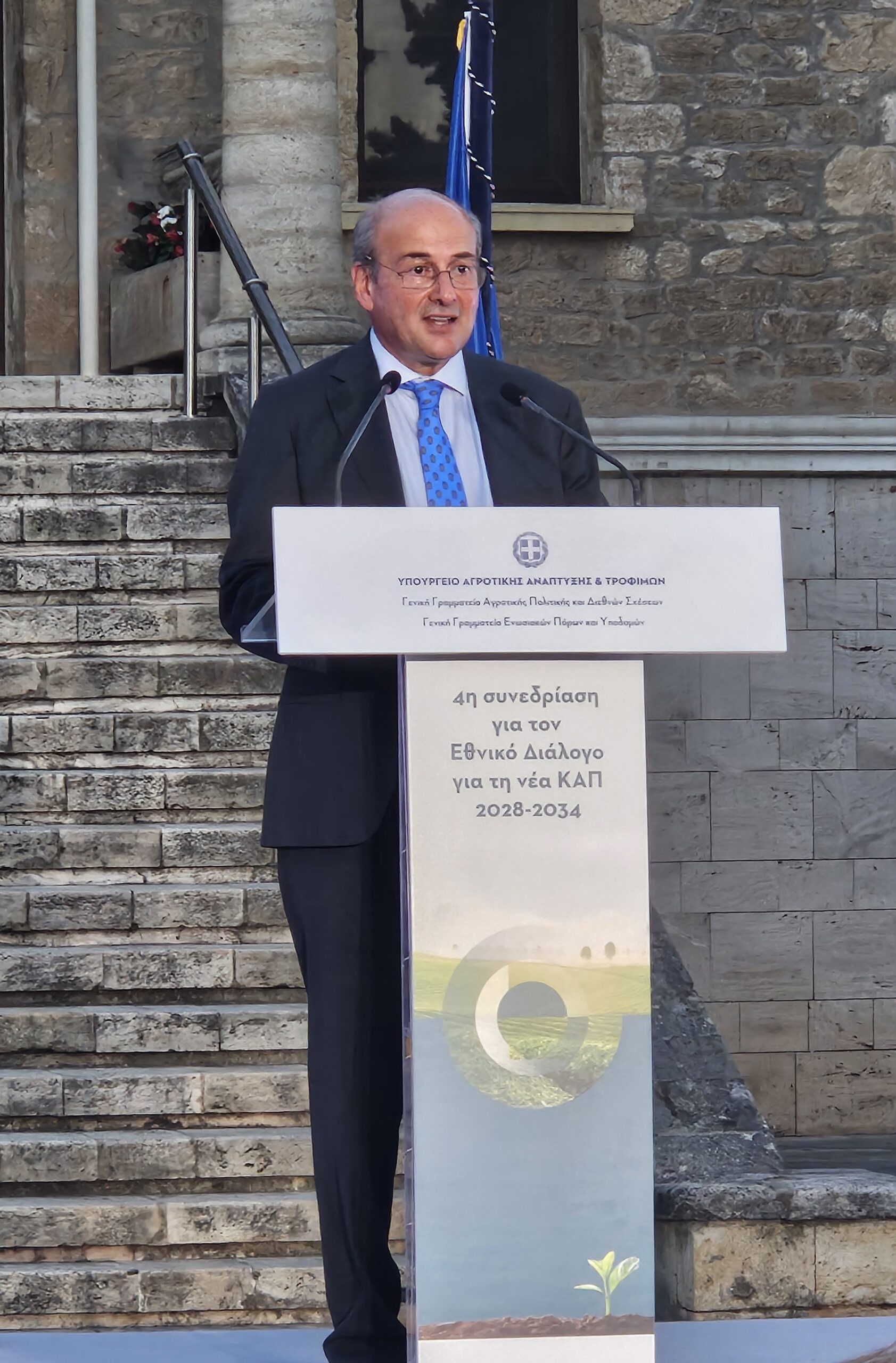
The event concluded with a speech by the Deputy Prime Minister, Mr. Kostis Hatzidakis. Mr. Hatzidakis reiterated the government’s commitment to resolving the issue of animal diseases, calling on all parties involved to strictly adhere to safety protocols. Regarding the new Common Agricultural Policy (CAP), he assured that the government would negotiate vigorously within the EU to secure the maximum possible funding, while calling on the agricultural community to focus on the effective use of these resources so that they yield the greatest possible benefit for the Greek economy.
Our presence